
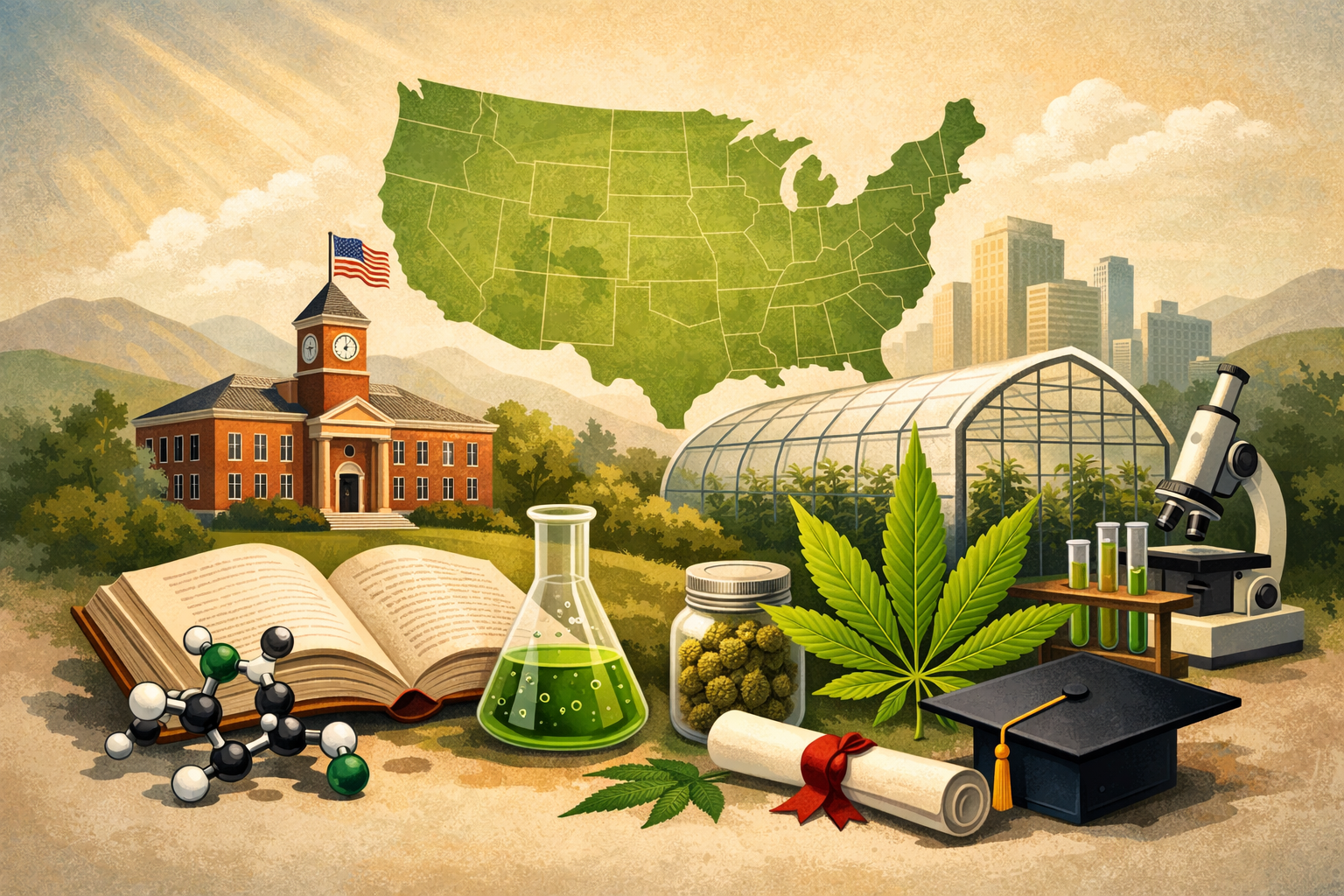
The conversation around cannabis in America is no longer limited to policymakers, businesses, or consumers. Now, colleges and universities are stepping into the spotlight, actively shaping the future of the legal cannabis industry. As legalization expands across the country, higher education institutions are evolving quickly. From launching cannabis-focused degree programs to conducting advanced research, universities are recognizing that cannabis is not just a cultural shift, but an economic and scientific opportunity. This shift reflects a broader transformation in how society views cannabis, especially as the legalization of marijuana in the US continues to expand. Let’s throw more light on this news with Jolly Green Life.
Universities Are Responding to Industry Demand
The rapid growth of the cannabis industry has created a clear need for skilled professionals. From cultivation experts to compliance specialists, the workforce demand is rising fast.
In response, colleges are developing specialized programs designed to prepare students for careers in cannabis. These programs often cover areas such as:
- Cannabis business management
- Regulatory compliance and CBD laws
- Cultivation science
- Product development and safety
The goal is simple: align education with real-world industry needs.
As marijuana markets mature, institutions are realizing that ignoring cannabis education means missing out on one of the fastest-growing sectors in the U.S. economy.
Cannabis Education Goes Beyond Degrees
Not every student wants a full degree in cannabis studies. That is why many universities are also offering:
- Certificate programs
- Continuing education courses
- Online training modules
These options make cannabis education more accessible to working professionals, entrepreneurs, and even policymakers.
Some programs focus specifically on hemp industry news updates, helping businesses understand compliance, licensing, and evolving regulations tied to hemp legislation and federal ban on hemp discussions.
This flexibility is helping normalize cannabis education across different career paths.
Research Is Driving the Next Phase of Cannabis Policy
Higher education institutions are not just teaching cannabis, they are actively researching it. Universities are conducting studies on:
- Medical applications of cannabinoids
- Public health impacts
- THC potency and consumer behavior
- Effects of regulation on illegal markets
This research plays a critical role in shaping policies related to thc government regulation, fda limit thc per serving hemp products, and broader discussions about federally legal thc.
As policymakers debate issues like hemp ban federal or thc product ban proposals, academic research is becoming a key source of evidence.
Navigating Federal Restrictions Remains a Challenge
Despite growing acceptance, universities still face challenges due to federal law.
Cannabis remains illegal at the federal level, which creates complications for institutions that rely on federal funding. This affects:
- Research approvals
- Funding opportunities
- Student aid programs
Because of this, many universities must carefully design programs that comply with existing weed law federal restrictions. Some institutions avoid direct handling of cannabis, focusing instead on policy, business, or theoretical education. Others partner with licensed operators to navigate legal risks. This balancing act highlights the ongoing tension between state legalization and federal prohibition.
Cannabis Programs Are Expanding Nationwide
From community colleges to major universities, cannabis programs are spreading across the country. States with legal markets are leading the way, but even institutions in more restrictive states are exploring cannabis education. This expansion reflects growing public interest in questions like:
- is marijuana getting banned
- is thc getting banned
- will thc gummies be banned
Students want clear answers, and universities are stepping in to provide evidence-based education rather than misinformation.
Preparing Students for a Regulated Industry
One of the biggest advantages of university-led cannabis education is its focus on regulation and safety. Unlike unregulated markets, academic programs emphasize:
- Product testing and labeling
- Safe consumption practices
- Legal compliance
- Ethical business operations
This is especially important as debates continue around issues like:
- fda cbd oversight
- thc container regulations
- hemp advertising laws
By preparing students for a regulated environment, universities are helping reduce risks associated with illegal markets.
The Role of Hemp in Cannabis Education
Hemp has become a major focus in academic programs, especially after the 2018 Farm Bill. However, ongoing discussions about a potential us hemp ban or hemp and thc ban are creating uncertainty in the industry.
Universities are helping students understand:
- hemp legality
- cannabinoid classification
- differences between hemp and marijuana
This knowledge is essential as new hemp legislation continues to evolve and reshape the market.
Why This Shift Matters for the Future
The integration of cannabis into higher education signals a major cultural and economic shift.
It shows that cannabis is no longer treated as a fringe topic. Instead, it is being recognized as:
- A legitimate industry
- A subject of scientific research
- A key area of public policy
As legalization pot efforts continue and more states adopt regulated markets, the role of education will only grow stronger.
Final Takeaway
Higher education is not just reacting to cannabis legalization, it is actively shaping its future. By training professionals, conducting research, and informing policy, universities are playing a critical role in the evolution of the cannabis industry. And as debates continue around issues like federal weed ban, thc bill proposals, and cbd farm bill updates, one thing is clear: The future of cannabis will be driven not just by laws and markets, but by knowledge.
FAQs
1. Why are universities offering cannabis programs?
Universities are responding to the growing demand for skilled professionals in the legal cannabis industry.
2. What do cannabis education programs include?
They cover topics like cultivation, compliance, cbd laws, business management, and product safety.
3. Is cannabis research allowed in universities?
Yes, but it is limited by federal restrictions since marijuana remains illegal at the federal level.
4. Are cannabis degrees useful for careers?
Yes, they prepare students for roles in cultivation, retail, compliance, and policy.
5. How does hemp fit into cannabis education?
Hemp is a major focus due to its legal status and role in cbd and cannabinoid markets.

James Carter has a background in science communication and a knack for breaking down complex topics into easy-to-understand stories. He loves diving deep into the facts behind CBD’s rise—from policy updates and market trends to new research. James is passionate about sharing the latest news and helping others understand what it all means. He writes clear and honest articles to keep readers updated on CBD laws, health benefits, and new products. When he’s not writing, he enjoys spending time outdoors and exploring natural ways to stay healthy.