
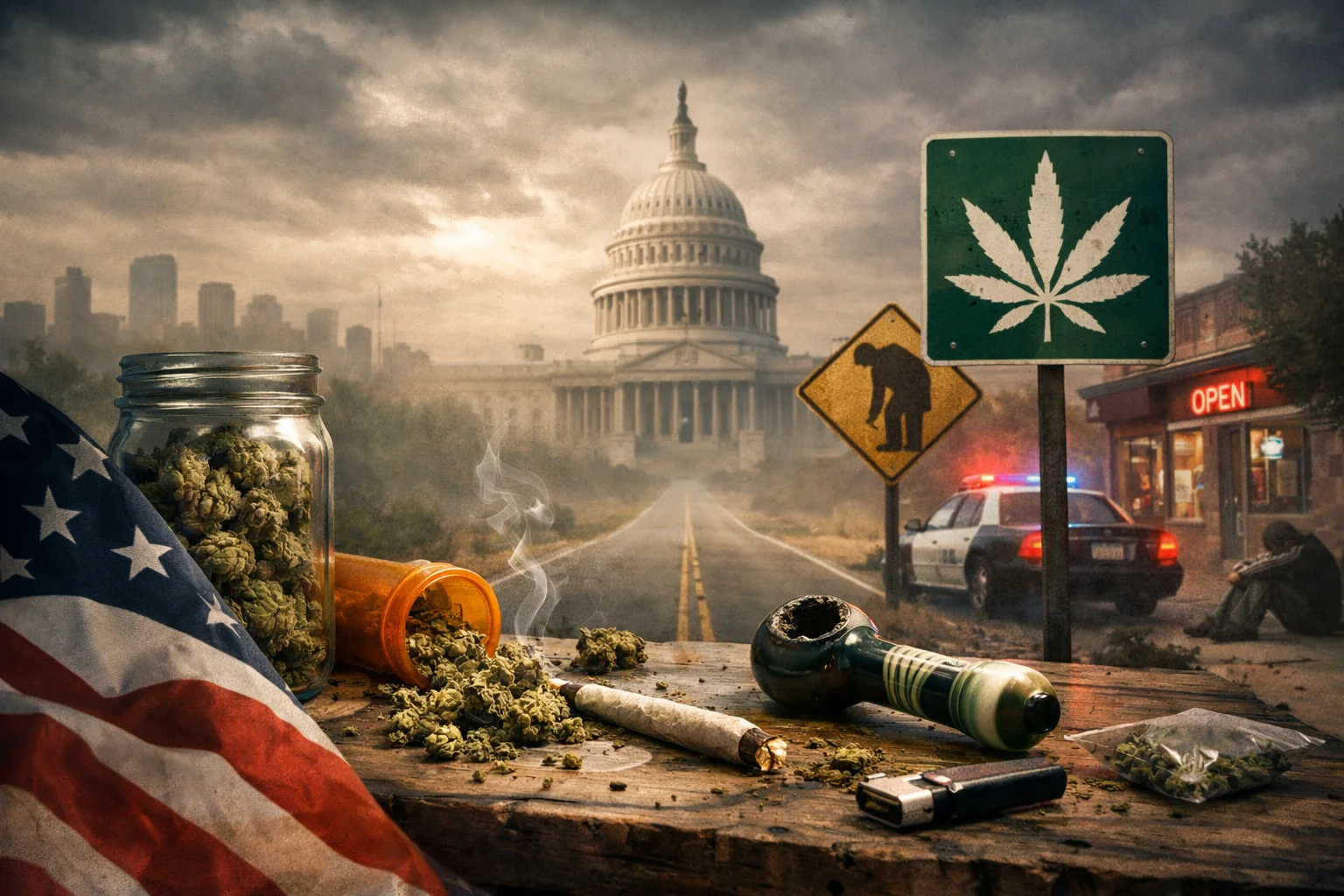
For much of modern U.S. history, marijuana policy has swung between extremes. Thirteen years ago, recreational cannabis was illegal everywhere in the country. Today, the situation is nearly reversed. Most Americans now live in states where adults can legally purchase and consume marijuana, and in December, President Donald Trump further accelerated this shift by easing federal restrictions.
The case for legalization has long been supported by this editorial board. In 2014, a six-part editorial series compared the federal ban on marijuana to alcohol prohibition and argued that criminalization caused more harm than good. Many of those arguments still stand today. But not all of them.
Back then, legalization advocates predicted limited negative consequences. Marijuana addiction was often described as a minor issue, and some supporters went further, portraying cannabis as largely harmless or even beneficial to health. Others suggested that legalization would not significantly increase usage.
With more than a decade of evidence now available, it is clear that several of those assumptions were wrong.
Marijuana Use Has Risen Sharply Since Legalization
More Americans now use marijuana daily than alcohol. Legalization has coincided with a dramatic increase in marijuana consumption. Recent surveys show that about 18 million people in the United States now use marijuana almost daily, meaning roughly five times a week or more. That figure was approximately six million in 2012 and less than one million in 1992.
Daily marijuana use has now surpassed daily alcohol use nationwide.
This surge in consumption has been accompanied by serious health and safety consequences. Each year, nearly 2.8 million Americans experience cannabinoid hyperemesis syndrome, a condition marked by intense vomiting and abdominal pain linked to heavy cannabis use. Hospitals are also seeing more patients suffering from marijuana-related paranoia and long-term psychotic disorders.
The risks are not confined to users themselves. Others have been harmed by drivers operating vehicles while impaired by marijuana, contributing to public safety concerns.
Prohibition Is Not the Answer
Despite these developments, returning to full-scale prohibition would be a mistake. The long-running war on marijuana created its own damage. Hundreds of thousands of people were arrested annually for simple possession, and the legal consequences fell disproportionately on Black, Latino, and low-income communities.
A country that permits adults to consume alcohol and tobacco cannot reasonably justify arresting people for marijuana use. For that reason, efforts to re-criminalize cannabis are misguided. This includes proposals such as a potential ballot initiative in Massachusetts that would ban recreational sales and home cultivation.
The Middle Ground Between Prohibition and Promotion
However, rejecting prohibition does not mean embracing unrestricted commercialization. The United States once went too far by criminalizing marijuana. More recently, it has gone too far in the opposite direction by normalizing, encouraging, and heavily marketing its use.
There is significant room between strict criminal enforcement and a hands-off commercial market. Given the growing evidence of harm, lawmakers should strengthen regulation rather than ignore the problem.
One promising framework comes from the late drug policy scholar Mark Kleiman, who described a strategy he called “grudging toleration.” Under this approach, marijuana remains legal, but governments actively work to limit its negative effects through smart regulation. Cultural expectations and social norms also play a role in discouraging excessive use.
The broader lesson is that public policy should evolve as new evidence emerges. When real-world outcomes differ from expectations, adjustments are necessary. In the case of marijuana, recent data suggests the country needs to adopt a more cautious and restrained attitude toward widespread use.
Legalize and Regulate, Not Just Legalize
For years, legalization advocates promoted the idea of “legalize and regulate.” While legalization has largely been achieved, meaningful regulation has lagged behind.
It is important to distinguish between moderate and excessive use. Occasional marijuana consumption is comparable to having a glass of wine with dinner or smoking a cigar to celebrate. Many people enjoy cannabis responsibly, and some patients with serious medical conditions have benefited from it. Adults should retain the freedom to make those choices.
But marijuana, like any product that offers pleasure while carrying risks, requires balance. Although it may be safer than alcohol or tobacco in certain respects, it is not harmless.
The Real Risk Lies in Heavy Use
The most significant concern is frequent and excessive consumption. Research shows that at least one in 10 marijuana users develops an addiction, a rate similar to alcohol dependence. Even among those who do not meet the clinical definition of addiction, overuse can still cause serious problems.
People who are frequently intoxicated may struggle to maintain steady employment or meet family responsibilities. A 2024 New York Times investigation found that doctors across the country are grappling with the consequences of increased marijuana use and rising product potency. The investigation concluded that the cumulative harm from legalization is broader and more severe than previously understood.
A Personal Story Highlights the Risks
The experience of Jennifer Macaluso, a hairdresser in Illinois, illustrates these dangers. She began using marijuana to manage severe migraines and initially found relief. Over time, however, her health deteriorated. Persistent nausea and vomiting became so severe that she was forced to stop working.
After months of medical visits, a doctor finally identified marijuana as the cause. Macaluso questioned why the risk had never been explained to her. She asked why more physicians were unaware of the condition and why no one had warned her earlier.
The Influence of the Marijuana Industry
Part of the problem lies in the growing power of the legal cannabis industry. For-profit marijuana companies now have strong incentives to minimize the risks of their products. Some marijuana and CBD businesses have falsely claimed their products can treat serious illnesses such as cancer and Alzheimer’s disease.
Others have marketed cannabis products in packaging designed to resemble children’s snacks, including items with names like “Trips Ahoy” and “Double Stuf Stoneo.”
Industry executives are well aware that profits depend heavily on frequent users. Roughly 20 percent of customers account for more than half of all marijuana sales, creating financial pressure to downplay the dangers of heavy use.
A Call for a More Responsible Approach
Marijuana policy does not need to swing back to prohibition, but it does need correction. Legal access should be paired with firm, thoughtful regulation aimed at reducing harm, discouraging overuse, and protecting public health.
Acknowledging the downsides of legalization is not a rejection of freedom. It is a recognition that no major policy shift is without consequences. As the evidence continues to mount, Americans should be willing to reassess how marijuana fits into society and adopt a more measured, responsible approach moving forward. For more recent cannabis new, stay tuned to Jolly Green Life.
FAQs
Has marijuana use increased since legalization?
Yes. Nearly 18 million Americans now use marijuana almost daily, a sharp rise from six million in 2012 and fewer than one million in 1992.
Is marijuana addiction a serious concern?
Yes. At least one in 10 marijuana users develops addiction, and many others experience harmful effects from frequent use even without dependency.
What health problems are linked to heavy marijuana use?
Heavy use has been linked to cannabinoid hyperemesis syndrome, paranoia, chronic psychotic disorders, and increased hospital visits.
Why don’t experts support returning to marijuana prohibition?
Prohibition led to mass arrests and disproportionate harm to Black, Latino, and low-income communities without effectively reducing use.
What do experts recommend instead of prohibition?
They recommend stronger regulation, cultural restraint, and a balanced approach known as “grudging toleration,” which keeps marijuana legal while limiting its harms.

James Carter has a background in science communication and a knack for breaking down complex topics into easy-to-understand stories. He loves diving deep into the facts behind CBD’s rise—from policy updates and market trends to new research. James is passionate about sharing the latest news and helping others understand what it all means. He writes clear and honest articles to keep readers updated on CBD laws, health benefits, and new products. When he’s not writing, he enjoys spending time outdoors and exploring natural ways to stay healthy.