
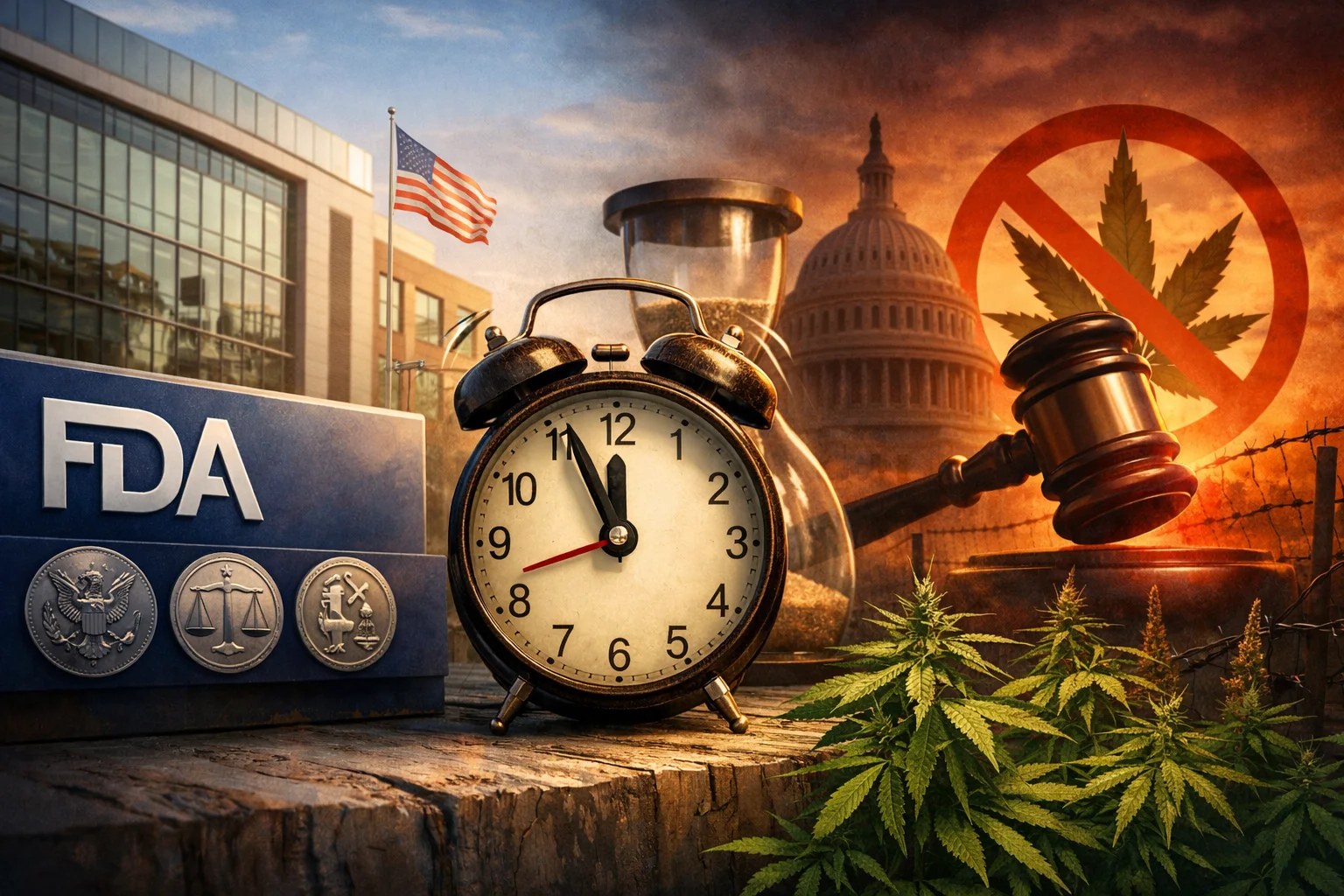
The federal hemp industry is heading toward what many describe as a dramatic turning point. Under legislation signed by President Donald Trump last year, sweeping changes to federal hemp policy are scheduled to take effect this November. For businesses, consumers, and lawmakers alike, the looming shift has raised urgent questions: Is THC getting banned? Did Trump sign a THC ban? Is marijuana being banned again at the federal level?
The short answer is complicated.
What Trump Actually Signed
Contrary to some headlines claiming “donald trump signs thc ban” or suggesting a sweeping federal weed ban, the law does not recriminalize marijuana outright. Marijuana remains illegal federally under existing weed law federal statutes and the Controlled Substances Act. However, the appropriations legislation Trump signed includes language that would significantly narrow the definition of hemp.
That shift has triggered headlines about a possible federal ban on THC products, a broader hemp and THC ban, and even claims that “trump recriminalizing hemp” or “did trump recriminalize weed.”
So, did Trump recriminalize hemp?
Not immediately. But the law sets the stage for what many in the hemp marketplace consider a de facto THC product ban beginning later this year.
The November Deadline That Could Upend the Market
Under the 2018 CBD Farm Bill, hemp was legalized federally as long as it contained less than 0.3% delta-9 THC on a dry-weight basis. That provision led to an explosion of federally legal THC products, including delta-8, delta-9 gummies, THC drinks, and other hemp-derived cannabinoid products.
Now, the new hemp legislation changes that definition.
Within one year of enactment, the THC threshold will apply to total THC, not just delta-9. That means delta-8, delta-10, and other isomers fall under the calculation. It also applies to any cannabinoid with similar effects to tetrahydrocannabinol — the scientific name often searched as tetrahydrocannabinol definition or simply thc def.
In practical terms, many products currently considered federally legal THC could become illegal.
That’s why searches like:
-
will THC gummies be banned
-
are THC gummies being banned
-
when does the THC ban go into effect
-
hemp ban 2026
-
marijuana ban 2026
have surged in recent hemp industry news updates.
The effective date is expected in November, though some proposals seek delay.
FDA’s Immediate Role: Publish and Define
Before the larger restrictions take effect, the Food and Drug Administration (FDA CBD regulators) face a near-term deadline.
Within 90 days of the bill being signed, FDA was directed to publish:
-
A list of all cannabinoids naturally occurring in cannabis
-
A list of all tetrahydrocannabinol class cannabinoids naturally occurring
-
A list of other cannabinoids with similar effects
Additionally, FDA must clarify the definition of a “container.”
Under the statute, a container is defined as the innermost wrapping or vessel directly touching the final hemp product — such as jars, bottles, bags, boxes, cartons, cartridges, or marijuana containers used for retail sale.
This seemingly technical container def matters enormously. The law limits legal hemp products to 0.4 milligrams of total THC per container.
For comparison, many delta-9 edibles contain 5 to 10 mg per serving. Consumers searching “10 mg delta 9 gummies effects” or “effects of delta 9” are looking at products far above the new cap.
If FDA enforces a strict interpretation of the THC container rule, even intermediate production materials — like liquid cannabinoid mixtures poured into cornbread molds for gummies — could violate the statute.
Adam Terry, CEO of Cantrip (often searched alongside cantrip def), explained that even if individually wrapped gummies contained 0.4 mg each, the bulk liquid used to make them would exceed the THC per container rule.
That could effectively ban domestic production.
What the New Hemp Definition Does
The law not only caps THC at 0.4 mg per container but also:
-
Prohibits intermediate hemp-derived cannabinoid products sold directly to consumers
-
Bans synthetic cannabinoids not naturally occurring in the plant
-
Extends restrictions to cannabinoids marketed as having similar effects to THC
This has fueled questions like:
-
is delta 9 legal in Pennsylvania
-
is delta 8 legal in Pennsylvania
-
are delta 9 gummies legal in Texas
-
are THC gummies legal in Florida
-
is delta-9 legal in Florida
-
are they banning THC in Texas
-
TX THC ban
State laws vary widely. For example, Kentucky weed laws differ from Wisconsin cannabidiol law, and CBD gummies legal in Florida may not align with Texas policy. But the federal ban on hemp products would override much of that flexibility.
Industry Reaction: Confusion and Chaos
Jim Higdon of Cornbread Hemp warned that without clear FDA guidance, the new law could create confusion across the THC marketplace.
He pointed to Senator Mitch McConnell’s earlier role in legalizing hemp and his more recent support for tighter THC restrictions — what some critics call the “McConnell hemp ban.”
Meanwhile def (meanwhile definition often searched as meanwhile def), bipartisan lawmakers introduced the HEMP Act, which would allow regulated hemp sales to adults 21+ instead of imposing a blanket ban.
Under that proposal:
-
Packaging couldn’t appeal to children
-
Marijuana containers would need tamper-proof designs
-
Labels must list cannabinoids
-
QR codes would link to certificates of analysis
-
Hemp businesses must register facilities
Manufacturers would also be prohibited from combining cannabinoids with alcohol, nicotine, melatonin, caffeine, or substances that could alter tetrahydrocannabinol interactions.
The Department of Health and Human Services would set total cannabinoid caps within 60 days.
Calls to Delay the Ban
Alcohol retailers and hemp stakeholders are urging Congress to delay implementation through the Hemp Planting Predictability Act. That proposal would postpone the federal ban on THC products for two years.
Some lawmakers argue Congress has passed legislation that will ban most hemp products without sufficient regulatory clarity. Others say the hemp provision was buried inside must-pass spending legislation.
Reports suggest Trump supported the prohibition language. GOP operative Roger Stone claimed the president was pressured. A White House spokesperson said Trump backed the language.
So when people ask:
-
did trump sign a THC ban
-
is trump banning hemp
-
is trump trying to ban THC
-
why did trump ban THC
The answer is that he signed legislation narrowing hemp legality, but he also issued an executive order directing marijuana rescheduling from Schedule I to Schedule III.
CBD Access and Medicare Expansion
In a separate move, Trump directed the Attorney General to complete marijuana rescheduling. His executive order also called on Congress to update hemp definitions to protect full-spectrum CBD access.
The administration announced that CMS will create a model allowing Medicare recipients to receive CBD under doctor recommendation at no cost.
That aligns with Trump’s earlier promotion of cannabidiol hemp health benefits and growing interest in cannabidiol FDA approval pathways.
Veterans and Research Concerns
Veterans organizations warn that a blanket ban could shut down cannabinoid research. Some fear it could upend medical cannabis progress just as older patients show health improvements using medical weed bottles and regulated THC containers.
Broader Questions About Hemp Legality
As November approaches, confusion remains widespread:
-
Is hemp illegal in the United States?
-
Is weed illegal now?
-
Is marijuana getting banned?
-
When was weed outlawed?
-
What states is delta 9 legal in?
Currently, marijuana remains federally illegal, hemp remains federally legal under specific limits, and delta-9 legality varies by state.
But if the federal ban on hemp products takes effect as written, many consumable THC items — including gummies, drinks, and inhalables — could disappear from shelves.
The Ramifications Ahead
The definition of ramifications is consequences, and the consequences here could reshape a multi-billion-dollar industry.
Farmers holding hemp cultivation licenses worry about their crops. Retailers with THC containers and weed packaging with box inventory question whether they’ll be stuck with unsellable goods. Consumers who rely on legal alternatives to THC or federally legal THC products are watching closely.
Some advocates argue Congress should legalize hemp more clearly rather than impose a sweeping prohibition. Others say public safety demands tighter THC government oversight.
For what it’s worth — define for what it’s worth as acknowledging limited weight — polls show four in five marijuana consumers oppose hemp recriminalization.
But unless Congress delays or amends the statute, the hemp ban federal shift could take effect this November.
Whether that amounts to a full marijuana ban 2026 scenario or simply a restructuring of hemp legality remains to be seen.
One thing is certain: the FDA’s upcoming cannabinoid lists and container guidance will play a critical role in determining whether this new chapter represents regulation — or the effective upended definition of the modern hemp marketplace. Stay up to date with cannabis news with Jolly Green Life.

James Carter has a background in science communication and a knack for breaking down complex topics into easy-to-understand stories. He loves diving deep into the facts behind CBD’s rise—from policy updates and market trends to new research. James is passionate about sharing the latest news and helping others understand what it all means. He writes clear and honest articles to keep readers updated on CBD laws, health benefits, and new products. When he’s not writing, he enjoys spending time outdoors and exploring natural ways to stay healthy.