
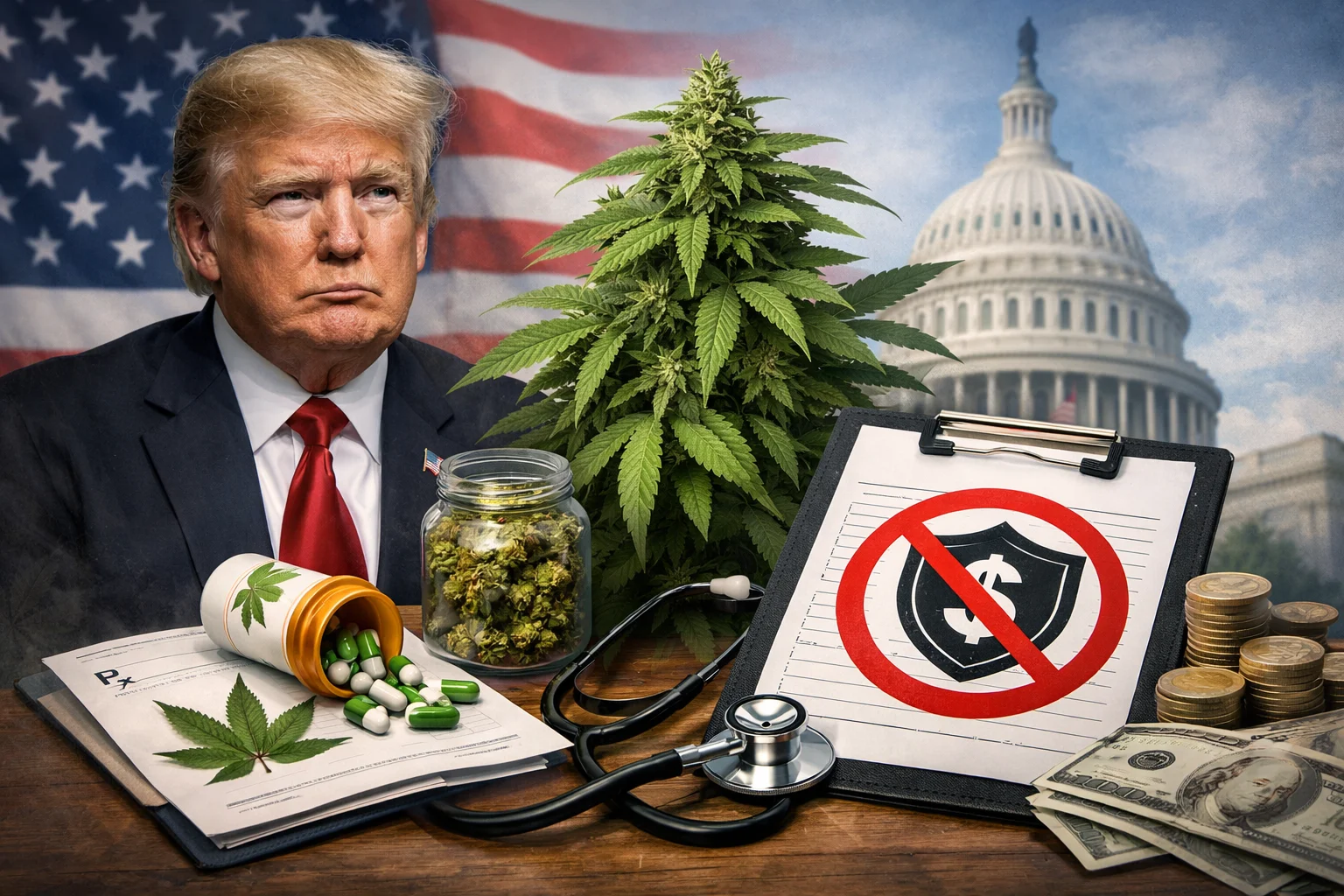
At Jolly Green Life, we closely follow policy developments shaping the future of the cannabis sector. One of the biggest recent developments is President Donald Trump’s executive order directing federal agencies to begin the process of rescheduling cannabis. For many investors and operators, the move has reignited optimism about the industry’s long-awaited normalization.
Stock prices have reacted, capital markets are showing renewed interest, and large cannabis companies are once again exploring mergers and acquisitions. On the surface, it appears that federal reform momentum could mark a turning point for the sector.
However, while cannabis rescheduling may bring meaningful improvements, it won’t automatically stabilize the cannabis industry. Tax relief alone cannot fix deeper structural challenges that affect how cannabis is accessed, financed, and sustained—especially when it comes to medical cannabis patients.
Why Cannabis Rescheduling Matters
Rescheduling cannabis from Schedule I to Schedule III under federal law would represent a significant shift in U.S. drug policy. Currently, Schedule I substances are defined as drugs with high abuse potential and no accepted medical use, which places cannabis in the same category as substances like heroin.
If cannabis is moved to Schedule III, it would signal that the federal government acknowledges potential medical value and a lower risk profile. For cannabis operators, this change could remove one of the industry’s most burdensome financial barriers: Section 280E of the Internal Revenue Code.
Section 280E prevents businesses that handle Schedule I substances from deducting normal operating expenses from their federal taxes. As a result, many cannabis companies face extremely high effective tax rates compared to businesses in other industries.
Removing cannabis from Schedule I could therefore:
- Improve profit margins for licensed cannabis operators
- Increase available cash flow within the industry
- Encourage institutional investors to reconsider the sector
These outcomes would certainly help cannabis companies operate more efficiently. But tax relief alone does not address the fundamental issue affecting the long-term stability of the industry.
The Industry’s Real Problem: A Structural Demand Issue
While taxation is a major concern, the deeper challenge facing the cannabis market is structural demand instability.
Unlike most medical treatments, cannabis is still largely purchased out of pocket by patients, even when used for legitimate therapeutic purposes. This creates a market dynamic that looks far more like retail consumer goods than healthcare.
Rescheduling does not automatically change that reality.
Moving cannabis to Schedule III does not require Medicare, Medicaid, or private insurance providers to reimburse cannabis-based therapies. It also does not create the infrastructure necessary for integrating cannabis into healthcare payment systems.
In other words, even after rescheduling, many patients will still need to pay for medical cannabis entirely on their own.
Why Insurance Reimbursement Matters
Healthcare markets function differently from traditional retail markets. When treatments are covered by insurance programs or employer-sponsored health benefits, patient access becomes more stable and predictable.
Insurance systems provide several advantages that the cannabis industry currently lacks:
Consistent patient access – Patients can continue treatment without worrying about weekly or monthly cash payments.
Structured care pathways – Doctors can prescribe treatments through established healthcare systems rather than relying on retail dispensaries alone.
Standardized billing and reimbursement systems – Providers can submit claims, track treatments, and maintain continuity of care.
Reduced price sensitivity – When insurance offsets part of the cost, patients are less likely to discontinue treatment due to financial pressure.
Without these systems, cannabis remains largely dependent on the fluctuations of consumer purchasing power.
The Limits of a Cash-Based Cannabis Market
Because most cannabis purchases are still paid directly by patients, the industry behaves more like a discretionary consumer market rather than a healthcare sector.
This distinction has important consequences.
Cash-based markets tend to be highly sensitive to price changes. Companies often compete aggressively through discounts, promotions, and pricing strategies to attract customers. While this can drive short-term sales, it also creates long-term instability.
In cannabis markets, these dynamics can lead to:
- Continuous price wars among dispensaries
- Inconsistent product pricing across regions
- Frequent promotional campaigns to attract customers
- Difficulty maintaining patient loyalty
When patients must pay out of pocket for their treatment, retention becomes fragile. If prices increase or personal finances change, many patients simply stop purchasing.
Why Industry Consolidation Isn’t a Complete Solution
Following signals of federal reform, cannabis companies have begun accelerating acquisitions and mergers in an effort to expand their market presence.
Consolidation can certainly create larger operators with broader distribution networks. However, scaling businesses alone does not solve the structural issues affecting cannabis demand.
Even large companies still compete for the same group of cash-paying consumers. Expanding delivery services or opening additional dispensaries does not fundamentally change how patients access or finance cannabis treatment.
Without deeper integration into healthcare systems, the cannabis industry may continue experiencing cycles of optimism followed by financial pressure.
How Healthcare Integration Could Stabilize Cannabis Markets
If cannabis were integrated into healthcare benefit systems, the entire market dynamic could shift.
In a healthcare-integrated system, cannabis therapies could be prescribed and reimbursed in ways similar to other treatments. Patients would access cannabis through structured healthcare pipelines rather than relying solely on retail purchases.
This type of system could provide:
- Reliable demand for medical cannabis products
- Greater physician involvement in treatment plans
- Clear regulatory frameworks for healthcare providers
- More consistent patient engagement with therapies
In healthcare markets, patients often continue treatment through established reimbursement systems. This stability encourages long-term treatment adherence and creates predictable demand for providers.
The Current Gap in Cannabis Healthcare Infrastructure
Despite growing recognition of cannabis as a potential therapeutic option, most medical cannabis programs operate outside the broader U.S. healthcare framework.
Several key components are still missing:
- Standardized medical billing codes for cannabis treatments
- Clear federal guidance for insurers and healthcare payers
- Claims systems capable of processing cannabis reimbursements
- Employer health benefit frameworks that include cannabis coverage
Because of this uncertainty, insurers often avoid entering the cannabis space altogether.
Employers that choose to support medical cannabis access must create customized reimbursement programs, which leads to fragmented and inconsistent solutions across different organizations.
The Role of Policy in Cannabis Industry Stability
Federal rescheduling may open the door to several positive developments. It could encourage more research into cannabis-based therapies, improve physician confidence in recommending cannabis treatments, and create clearer regulatory standards.
However, none of these changes automatically produce insurance coverage or reimbursement systems.
If policymakers want the cannabis industry to evolve into a true healthcare-adjacent sector, additional reforms will be necessary.
These reforms could include:
- Establishing national reimbursement guidelines
- Creating standardized medical billing codes for cannabis therapies
- Providing compliance guidance for insurers and healthcare providers
- Supporting employer-sponsored medical cannabis benefits
Such steps would help bridge the gap between retail cannabis markets and the broader healthcare system.
The Risk of Continued Market Volatility
Without structural reform beyond tax policy, the cannabis industry may continue experiencing cycles of optimism followed by instability.
Regulatory progress often sparks investor enthusiasm and acquisition activity. But if the underlying market structure remains unchanged, companies may still face the same challenges they struggled with before.
These challenges include shrinking margins, intense price competition, and difficulty maintaining long-term patient engagement.
True industry stability requires more than removing tax barriers—it requires creating systems that support sustainable demand.
Final Thoughts
The potential rescheduling of cannabis represents an important milestone for federal cannabis reform. Removing the restrictions imposed by Schedule I classification could significantly improve the financial outlook for many cannabis businesses.
But tax relief alone cannot stabilize the cannabis industry.
A long-term solution will require integrating cannabis into the healthcare infrastructure that governs how treatments are accessed, paid for, and sustained. Until insurance reimbursement systems and benefit frameworks are developed, cannabis will remain caught between two identities—treated as medicine by patients but treated as a retail product by federal healthcare systems.
At Jolly Green Life, we continue tracking the policies, research developments, and industry changes shaping the future of cannabis. As legalization evolves, understanding how policy reforms affect both businesses and patients will remain essential for anyone following the growth of this rapidly changing industry.
FAQs
What does cannabis rescheduling mean?
Cannabis rescheduling refers to moving marijuana from Schedule I to another category under the Controlled Substances Act. This change would recognize potential medical value and reduce regulatory barriers.
How would cannabis rescheduling affect cannabis companies?
If cannabis moves to Schedule III, businesses could avoid the tax restrictions of Section 280E. This would allow companies to deduct operating expenses and improve profitability.
Why is insurance reimbursement important for medical cannabis?
Insurance reimbursement helps patients access treatments consistently without paying entirely out of pocket. Coverage systems also stabilize demand in healthcare markets.
Will rescheduling automatically allow insurance coverage for cannabis?
No. Rescheduling alone does not require insurers like Medicare, Medicaid, or private providers to reimburse cannabis therapies.
Why does the cannabis industry face unstable demand?
Most cannabis purchases are still cash-based. Because patients pay directly, demand fluctuates with prices, promotions, and consumer spending habits.

James Carter has a background in science communication and a knack for breaking down complex topics into easy-to-understand stories. He loves diving deep into the facts behind CBD’s rise—from policy updates and market trends to new research. James is passionate about sharing the latest news and helping others understand what it all means. He writes clear and honest articles to keep readers updated on CBD laws, health benefits, and new products. When he’s not writing, he enjoys spending time outdoors and exploring natural ways to stay healthy.