
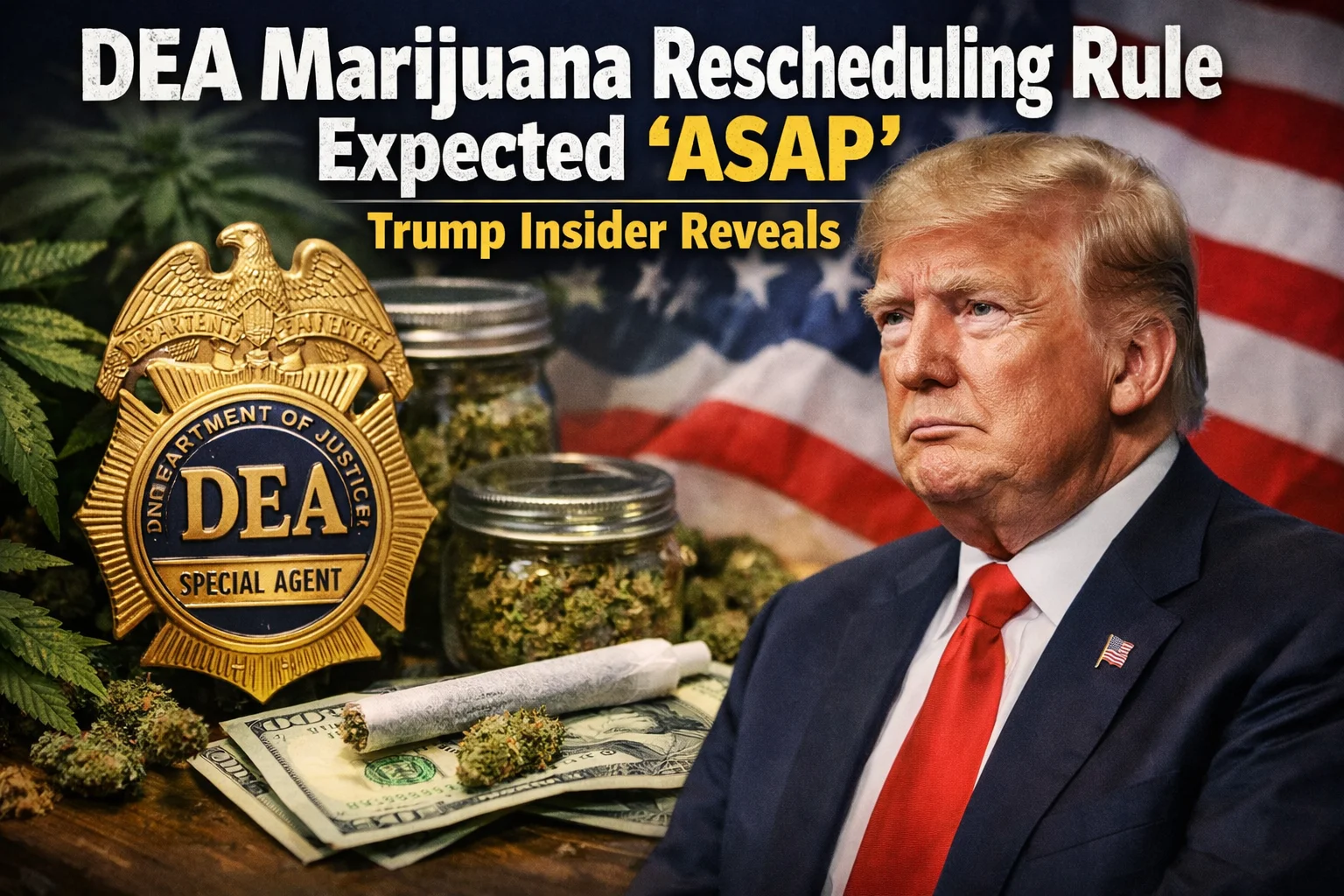
A major shift in U.S. cannabis policy could be imminent, as a Trump administration insider says the Drug Enforcement Administration (DEA) is preparing a long-awaited marijuana rescheduling rule and intends to move forward with it as soon as possible. The update comes alongside a wave of federal, state, and international cannabis developments ranging from hemp regulations and decriminalization efforts to new medical research and business activity.
DEA Drafting Cannabis Rescheduling Rule
Former Rep. Matt Gaetz of Florida, who was President Donald Trump’s initial pick for attorney general this term, revealed that he has been informed the DEA is actively drafting a marijuana rescheduling rule. According to Gaetz, the agency is working to move the process forward “ASAP,” signaling urgency behind the federal review.
If finalized, the rule would follow President Trump’s directive to reconsider marijuana’s classification under federal law, potentially reshaping enforcement, research access, and state-level reform momentum.
USDA Moves to Update Hemp Industry Forms
At the federal level, the U.S. Department of Agriculture is seeking White House approval to revise a series of hemp-related forms used by farmers and regulators. The changes are designed to give the federal government a clearer picture of the hemp industry’s size, scope, and compliance trends as the market continues to evolve.
States See Rescheduling as a Catalyst for Reform
West Virginia Lawmakers Weigh Impact
West Virginia’s House speaker said federal cannabis rescheduling could help accelerate marijuana reform efforts at the state level. Lawmakers view federal movement as a signal that broader legalization or medical expansion may be politically viable.
Delaware Advances Public Use Decriminalization
The Delaware House Health and Human Development Committee approved legislation to decriminalize public marijuana use. If enacted, Delaware would no longer be the only legalization state that still allows jail time for public consumption.
New Hampshire Considers Voter-Driven Legalization
In New Hampshire, the House Criminal Justice and Public Safety Committee held a hearing on a proposed constitutional amendment that would allow voters to decide marijuana legalization in the November election.
Medical Marijuana Developments Across the U.S.
Nebraska senators introduced a bill that advocates warn could weaken patient rights by granting the Medical Cannabis Commission authority to remove existing protections.
In Alabama, the Medical Cannabis Commission extended a stay on a dispensary license amid ongoing legal disputes.
Mississippi lawmakers advanced a bill through the House Public Health and Human Welfare Committee to expand qualifying conditions for medical marijuana patients.
Meanwhile, West Virginia lawmakers approved a proposal that would allow psilocybin prescriptions if federal legalization occurs.
Enforcement Actions and Regulatory Shifts
Nebraska Governor Jim Pillen signed an executive order directing state agencies to crack down on synthetic THC products.
California Governor Gavin Newsom announced that more than $1.2 billion worth of illicit marijuana has been seized and destroyed since 2022 through the state’s Unified Cannabis Enforcement Task Force.
Florida officials are investigating petition handling related to a proposed marijuana legalization ballot initiative processed by a county elections office.
Michigan cannabis regulators released their annual statistical report, while New Jersey regulators published an FAQ clarifying a new hemp product restriction law.
Local, International, and Legal Updates
Local Policy Change
The Humboldt County Board of Supervisors in California voted to repeal a cannabis cultivation tax, offering relief to growers facing financial pressure.
International Expansion
Brazilian regulators are moving to expand approved uses of cannabis-based therapies, signaling growing acceptance of medical marijuana internationally.
Science and Health Research Highlights
New studies continue to expand scientific understanding of cannabis compounds. One study found that cannabis sativa dichloromethane extract shows potential as an anti-breast cancer therapeutic, warranting further research. Another concluded that CBD may provide neuroprotective effects by reducing oxidative stress and preventing neuronal cell death.
Advocacy, Business, and Industry News
Strategies 64 released a white paper outlining a roadmap for ending federal cannabis prohibition and addressing the separation between marijuana and hemp policy.
On the business side, Vireo Growth Inc. entered a nonbinding agreement to acquire Scotts Miracle-Gro’s cannabis-focused Hawthorne Gardening Company. Cannara Biotech received conditional approval to uplist to the Toronto Stock Exchange, while Curaleaf was ordered to pay nearly $600,000 to a former employee who claims wrongful termination.
Why This Matters
As federal agencies move closer to rescheduling marijuana, states are responding with renewed legislative activity, regulatory updates, and enforcement changes. Together, these developments suggest that U.S. cannabis policy may be entering a pivotal transition period.
For continued cannabis policy coverage and updates, readers can explore more in-depth reporting on Jolly Green Life, which tracks marijuana reform, legalization trends, and industry shifts nationwide.
FAQs
When will the DEA release the marijuana rescheduling rule?
A Trump administration insider says the DEA is drafting the rule and intends to move forward as soon as possible, though no exact date has been announced.
Would rescheduling marijuana legalize it nationwide?
No. Rescheduling would change marijuana’s federal classification but would not automatically legalize recreational use across all states.
Why is Delaware’s decriminalization bill significant?
Delaware is currently the only legalization state that still allows jail time for public marijuana use, making this reform especially impactful.
How does federal rescheduling affect states like West Virginia?
State lawmakers believe federal action could encourage broader cannabis reforms by reducing legal and political barriers.
Are medical cannabis laws still changing despite rescheduling talks?
Yes. Multiple states are expanding qualifying conditions, reviewing patient protections, and adjusting regulatory frameworks independently of federal action.

James Carter has a background in science communication and a knack for breaking down complex topics into easy-to-understand stories. He loves diving deep into the facts behind CBD’s rise—from policy updates and market trends to new research. James is passionate about sharing the latest news and helping others understand what it all means. He writes clear and honest articles to keep readers updated on CBD laws, health benefits, and new products. When he’s not writing, he enjoys spending time outdoors and exploring natural ways to stay healthy.