
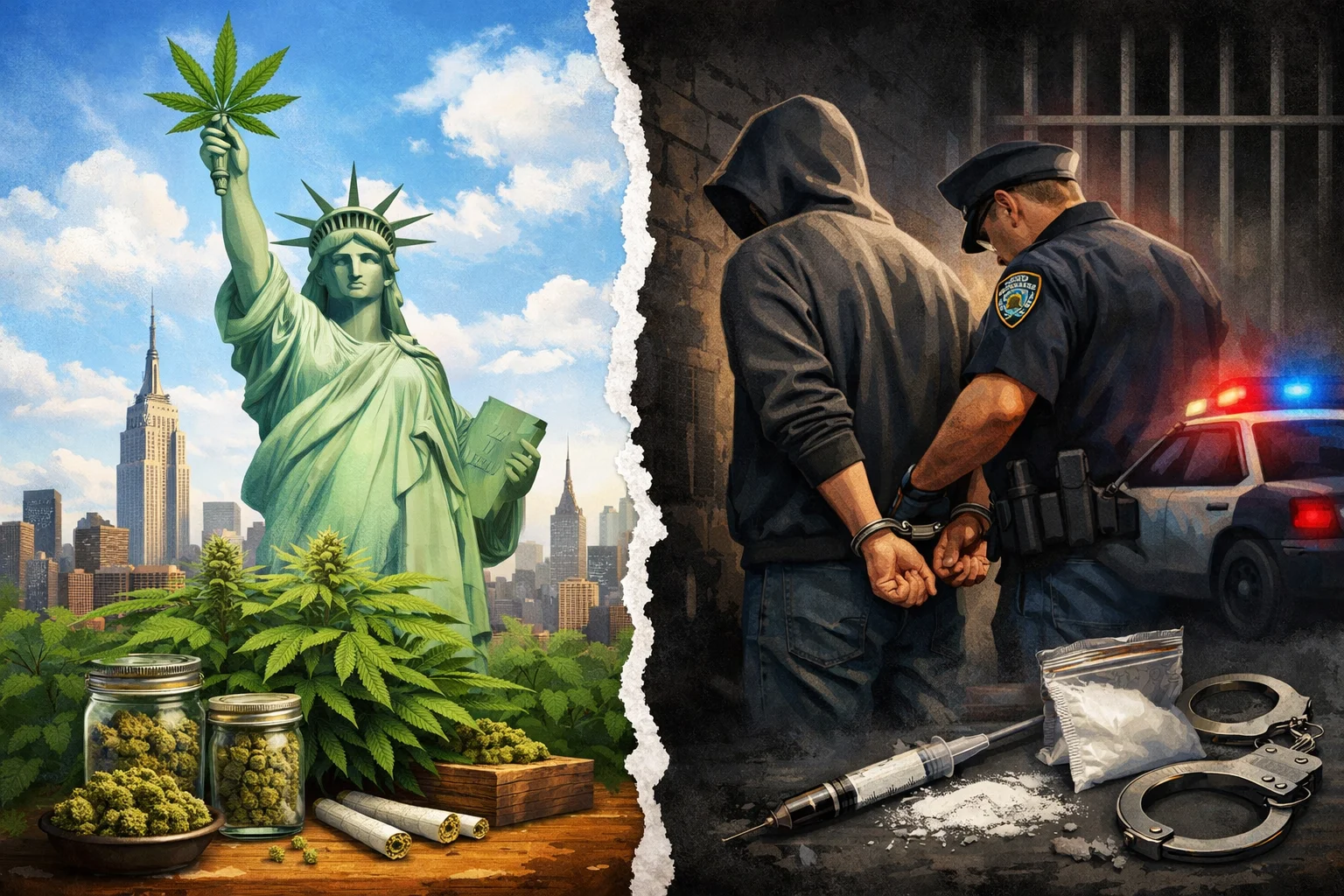
MMThe ongoing debate over marijuana news in America recently intensified after an editorial from thenewyorktimes questioned whether states moved too quickly in embracing the legalization of marijuanas in us. The piece suggested regulators have not done enough — particularly around taxes on weed, youth protections, and product potency.
But critics argue that while the editorial raises some valid concerns, it also misrepresents how regulated cannabis markets actually function.
This response — written in the spirit of clarifying what the. new york times and even what some readers searching “about nytimes” or “about nytimes” may be wondering — breaks down what the publication got wrong, what it got right, and what the broader marijuana policy conversation is missing.
(For those wondering when the New York Times was established, it was founded in 1851, and today remains one of the most influential voices in national policy discussions. But influence does not always mean accuracy.)
The Claim: States Legalized Too Quickly Without Proper Regulation
The editorial board at the new york times news paper argued that many states legalized cannabis “without adequately regulating it.” That framing has circulated widely across platforms — from chatgpt nyt searches to forums asking whether nyt failing or nty coverage is biased.
However, the reality is that state-legal cannabis markets are among the most heavily regulated consumer markets in the country.
In many jurisdictions, cannabis products face stricter oversight than alcohol sales ohio gas stations, tighter labeling requirements than ed’s liquor, and more testing mandates than most dietary supplements. Most legal states impose taxes on weed that exceed taxes on alcohol. In some places, the total tax burden approaches 40 percent. That is far from light regulation.
Excessive taxation has created its own challenge. When legal products are taxed too heavily, consumers sometimes turn to cheaper, unregulated sellers. Raising taxes further would likely strengthen the illicit market — directly undermining the purpose of legalization pot policy, which is to move consumers toward safe, lab-tested, transparent products.
The Packaging and “Big Weed” Argument
The new york times new york suggested that so-called “Big Weed” companies are marketing products that mimic children’s snacks.
But the products cited including copycat items resembling candy brands are typically sold in unregulated markets. These are often hemp-derived intoxicants found in convenience stores and smoke shops in states where cannabis remains illegal.
They are not sold in licensed dispensaries.
State regulations already prohibit packaging that resembles trademarked brands or appeals to youth. Licensed producers cannot legally manufacture those look-alike products. In legal states, demand for them is low because consumers prefer tested, transparent products from regulated outlets like high times smoke shop-style dispensaries — not gas station items that fuel memes like “don t ever buy no weed from the gas.”
Potency Concerns and Self-Titration
Another criticism involves potency — a word that appears frequently in marijuana news coverage. The editorial warns that legalization has unleashed uniquely strong products.
But high-potency cannabis is not new. Concentrated forms like hashish have existed long before modern legalization. What legalization has done is bring transparency to potency levels.
In regulated states, potency limits are common. Many impose caps on THC per serving or total THC per package. Some consumers specifically ask questions like is pre ground weed less potent or even search phrases such as 38 thc out of curiosity about strength.
Importantly, consumers tend to self-regulate their intake through a behavioral process known as self titration. When potency increases, many individuals consume smaller amounts — much like drinking less high-proof liquor than beer. That norml adjustment behavior is common across substances.
Adult Use vs. Youth Use
One point the editorial emphasizes is that adult cannabis use has increased post-legalization.
That is accurate.
But what it does not highlight is that youth use has dropped significantly over the same period.
Federal survey data shows marijuana use has declined since 2012 by:
-
25 percent among 12th graders
-
45 percent among 10th graders
-
38 percent among 8th graders
These declines overlap directly with state-level legalization and regulation.
For readers asking why is marijuana legal in some states or why is marijuana legal — this is part of the broader argument: regulated access appears to reduce youth exposure compared to prohibition-driven black markets.
Cannabis vs. Alcohol
The new york times new york times new york times editorial noted that among some groups, cannabis use is surpassing alcohol consumption.
That observation has prompted online commentary ranging from wrong right debates to search trends like is pot legal in america, legalize pot, legalize pot ny, and advantages of legalizing weed.
But this shift is not inherently alarming.
Alcohol’s health risks are well documented. As public awareness of those risks grows, consumption patterns change. Even the editorial acknowledged that marijuana is safer than alcohol in several respects.
If adults substitute a lower-risk substance for a higher-risk one, that is not necessarily a public health failure.
The Bigger Policy Question
Today, nearly 70 percent of Americans support legalize pot measures. Twenty-four states and the District of Columbia have legalized adult-use cannabis. No state has reversed legalization pot policies after implementing them.
That includes jurisdictions like times nyc — where people still ask is recreational marijuana legal in new york, is thc legal in new york, is thc legal in ny, and is weed legal in nyc 2025. (Yes, adult-use cannabis is legal in New York under state law.)
District of Columbia weed laws also permit adult possession, though retail sales operate under unique congressional constraints.
The advantages of legalization of weed include regulated safety standards, age verification, lab testing, and oversight authority — tools prohibition never offered.
What the Editorial Got Right
There is one major point where critics agree with the editorial board.
America should not return to heavy-handed criminal prohibition.
That approach resulted in hundreds of thousands of arrests annually, disproportionately affecting marginalized communities. The failure of prohibition sparked the modern legalization movement in the first place.
For readers typing what year was weed made illegal (federally, 1937 via the Marihuana Tax Act, later reinforced under Schedule I classification), history shows prohibition’s track record.
Reversing course now would recreate those harms.
Regulation Is a Work in Progress
Has legalization been perfect? No.
Should regulators continue refining policy as markets evolve? Yes.
Cannabis reform remains a developing system. Governments can adjust taxation, refine potency caps, monitor cultivation labs pre-roll deals, and enforce labeling standards without dismantling legalization altogether.
The conversation should not be framed as either criminalization or chaos. There is a middle path — structured regulation.
Why This Debate Matters
Search trends reveal public curiosity:
-
why is marijuana legal in some states
-
what is the best weed in schedule 1
-
advantages of legalization of weed
-
taxes on weed
-
legalization pot
Meanwhile, conversations about new york times login, got to nyt, connection new york times, new york times contest, and even playful misspellings like new yprk times, new york tgimes, new york tijmes, new jork time, the new yoek times, new york timse, new york tims, new york tinmes, new york ti es, the new york tines, new york tkmes, new york itmes, new york tyimes, the new york tiems, the new york tiimes, the new york timews, new yorktimes, newyork time, newyourktimes, new yor times, new yokr times, new oyrk times, neyork times, new yotk times, new yrk times, ne wyork times, newwork times, ny york times, nyties, nytime, nty, nty, bnew york times, mew york times, and even new york times new york times new york times reflect how central the paper remains in shaping debate.
But whether reading latest news new york times or debating whether nyt failing in its marijuana coverage, the core issue remains policy balance.

James Carter has a background in science communication and a knack for breaking down complex topics into easy-to-understand stories. He loves diving deep into the facts behind CBD’s rise—from policy updates and market trends to new research. James is passionate about sharing the latest news and helping others understand what it all means. He writes clear and honest articles to keep readers updated on CBD laws, health benefits, and new products. When he’s not writing, he enjoys spending time outdoors and exploring natural ways to stay healthy.