
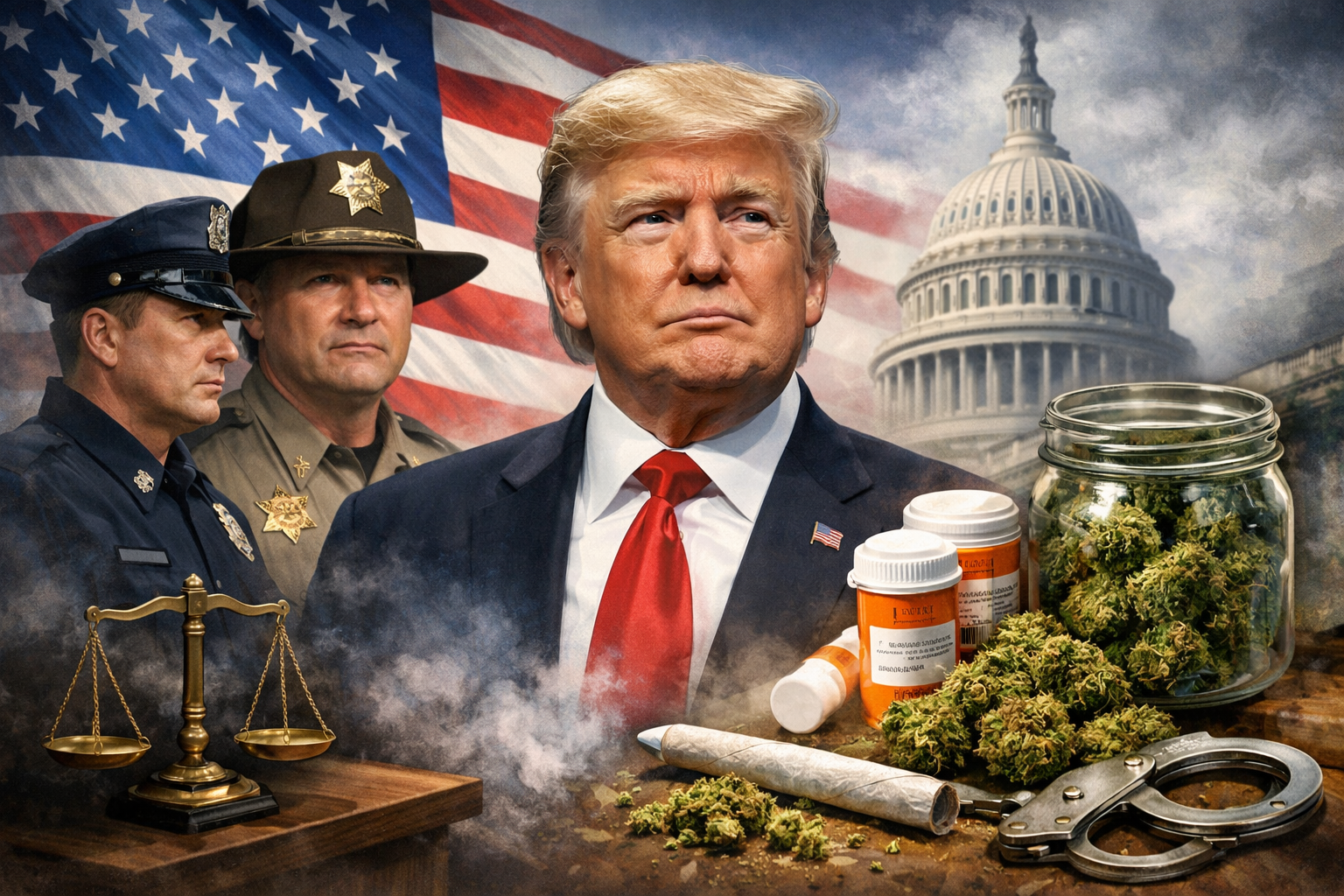
For decades, police officers across the United States have worked under tight budgets, limited manpower, and expanding responsibilities. According to many current and former law enforcement officials, federal marijuana policy has made that challenge even harder. That is why a growing number of police chiefs, sheriffs, prosecutors, and advocacy groups are supporting President Donald Trump’s move to reschedule marijuana under federal law.
Gary Wiegert, a former sergeant with the St. Louis Metropolitan Police Department who served from 1980 to 2015, says the issue is not political. From his perspective, it is about effective policing and public safety.
The Burden of Marijuana Enforcement on Police Resources
Marijuana has been classified as a Schedule I drug for more than 50 years, placing it in the same category as heroin. Under federal law, that classification implies no accepted medical use and a high potential for abuse. Yet Wiegert and many officers argue that this designation no longer reflects reality.
Today, cannabis is legal in some form in 38 states, with millions of Americans using it legally under state law. This disconnect between federal and state policy has forced police departments to navigate conflicting rules, often wasting time and resources.
As Wiegert points out, every hour spent addressing a simple marijuana possession case is an hour not spent tackling violent crime, dismantling human trafficking networks, or removing fentanyl from communities.
Arrest Data Highlights the Problem
Statistics from the Law Enforcement Action Partnership help explain why many officers believe rescheduling is overdue. Since 2011, the United States has recorded approximately 11.8 million drug-related arrests. More than 80 percent of those arrests involved simple possession rather than trafficking or violent offenses.
Cannabis alone accounts for about 35 percent of all drug arrests and 44 percent of drug possession arrests. Even more striking, roughly 16.5 percent of all arrests nationwide since 2011 were for simple cannabis possession.
From a law enforcement standpoint, these numbers raise a serious question: is focusing on low-level marijuana cases really the best use of limited policing resources?
How Conflicting Laws Fuel Illegal Markets
Wiegert explains that inconsistent federal and state laws also create opportunities for criminal organizations. In states such as California and Oklahoma, unlicensed cannabis operations tied to organized crime have emerged. These illegal grows and sellers ignore safety rules, avoid taxes, and make no effort to keep products away from minors.
At the same time, licensed cannabis businesses operating legally under state law face heavy federal tax penalties. Because marijuana remains a Schedule I substance, these companies cannot deduct standard business expenses on their federal taxes, unlike nearly every other legal industry. This imbalance makes it harder for regulated businesses to compete and unintentionally pushes consumers toward illegal markets.
Why Schedule III Matters for Public Safety
Rescheduling marijuana to Schedule III would not legalize cannabis nationwide. Substances in Schedule III are still regulated and controlled. However, the change would formally recognize that cannabis has accepted medical uses and a lower abuse potential than Schedule I drugs.
From a policing perspective, rescheduling would help level the playing field. Legal businesses could operate more fairly, regulators would have stronger oversight tools, and law enforcement could focus on serious threats rather than low-level possession cases.
A Personal Issue for Many Officers
For many in law enforcement, this debate is also deeply personal. Research shows that police officers, first responders, and military veterans experience post-traumatic stress disorder at rates up to five times higher than the general population.
Cannabis-based treatments have shown potential benefits for PTSD and related conditions. However, strict federal restrictions make access difficult, particularly for active-duty military members and federal employees. While rescheduling would not solve these issues overnight, supporters say it would be a meaningful step toward a more practical and humane policy.
Broad Support Within Law Enforcement
Support for rescheduling is not limited to individual officers. Organizations such as the Law Enforcement Action Partnership and Law Enforcement Leaders have formally endorsed moving marijuana to Schedule III. Their position is based on years of firsthand experience enforcing prohibition and observing its unintended consequences.
According to Wiegert, the current system undermines effective policing, sustains criminal markets, and prevents officers from focusing on crimes that truly threaten public safety.
A Call for Policy to Match Reality
Advocates argue that cannabis can be regulated responsibly, much like alcohol or prescription medications. Rescheduling would also make scientific research easier, helping policymakers, doctors, and law enforcement better understand both benefits and risks.
After decades of enforcing marijuana prohibition, many officers have reached the same conclusion: federal policy needs to reflect modern reality. Moving cannabis to Schedule III is seen as a practical, evidence-based reform that could improve public safety, reduce unnecessary arrests, and allow police to do their jobs more effectively.
As Wiegert puts it, supporting marijuana rescheduling is not about being for or against cannabis. It is about smarter policing, better use of resources, and safer communities. That, he says, is not politics. It is simply good policing. For more recent cannabis news, stay tuned to Jolly Green Life.
FAQs
Why do many law enforcement officers support marijuana rescheduling?
Officers argue that enforcing marijuana prohibition drains limited resources and distracts from serious crimes like violent offenses and drug trafficking.
What does rescheduling marijuana to Schedule III mean?
Schedule III status would recognize accepted medical uses and lower abuse potential while keeping cannabis regulated at the federal level.
How does current marijuana enforcement affect police workloads?
A large share of arrests involve low-level cannabis possession, pulling officers away from higher-priority public safety threats.
Does marijuana rescheduling legalize cannabis nationwide?
No. Rescheduling changes federal classification but does not legalize marijuana across all states.
Why do officers say current laws help illegal cannabis markets?
Conflicting federal and state laws weaken legal businesses and give unregulated operators an advantage, fueling criminal activity.

James Carter has a background in science communication and a knack for breaking down complex topics into easy-to-understand stories. He loves diving deep into the facts behind CBD’s rise—from policy updates and market trends to new research. James is passionate about sharing the latest news and helping others understand what it all means. He writes clear and honest articles to keep readers updated on CBD laws, health benefits, and new products. When he’s not writing, he enjoys spending time outdoors and exploring natural ways to stay healthy.